Showing posts with label Handwriting. Show all posts

Monday, October 18, 2010

Stephen Maturin discusses handwriting with Jack

Regular readers know I am a great fan of Patrick O’Brian and his Aubrey-Maturin series of novels. I am again reading the lot one after another and today I happened to come across one of those references to good handwriting in ‘The Commodore’. In the days O’Brian is writing about, handwriting was used in many official naval documents: ship’s logs, maps, Admiralty orders, pretty much everything, and the ability to write in a good hand was much valued. Perhaps it was so in Plato’s time also.

Stephen said, ‘Will I tell you another of Plato’s observations?’
‘Pray do,’ said Jack, his smile briefly returning.
‘It should please you, since you have a very pretty hand. Hincksey quoted it when I dined with him in London and we were discussing the bill of fare: “Calligraphy,” said Plato, “is the physical manifestation of an architecture of the soul.” That being so, mine must be a turf-and-wattle kind of soul, since my handwriting would be disowned by a backward cat; whereas yours, particularly on your charts, has a most elegant flow and clarity, the outward form of a soul that might have conceived the Parthenon.’
Jack made a civil bow, and pudding came in: spotted dog.

Of course, Stephen is a doctor and who ever heard of a doctor with good handwriting. And if anything, Stephen is the proof that Plato’s observation does not always stand the test. But whereas a bad hand is not always a condemnation, a good hand is certainly always a recommendation. 

Image: extract from the log book of HMS Victory

Wednesday, October 13, 2010

The History of Writing

This is a guest post by Louise Baker. Louise ranks online degrees for Zen College Life. She most recently wrote about the best colleges online.

Ever since time began, man felt the need to express all his thoughts, feelings and desires within the format of the written word. It is very likely that man evolved the concept of writing long before he established the capacity for any form of intelligibly audible exposition.

Early Writings

The earliest forms of writing were more than likely simplistic scratchings on clay, sand or rock. Recently, certain clay tokens were found which had the possibility of being the earliest example of written communication in ancient times. In the prehistoric times, certain pictograms upon numerous cave walls have been collectively acknowledged to be the fundamental precipitators of the written word as we know it today. Interestingly enough, the pictures operated with the same underlying compulsions which would have spawned the written word; the need to convey thoughts, ideas and the ability to mark and record daily business transactions in a tangible and understandable medium. For the longest time, writing consisted of pictographs recorded on malleable substances such as clay or soft rock. Cuneiform and ancient Egyptian hieroglyphics combined elements of pictures and words to express thoughts as fully as possible in what is considered some of the most advanced writing systems at those times. In the Orient, however, the standard for the written characters of most Oriental cultures stems directly from one source... the Chinese; whose influence is established in the writing systems of both Vietnam and Japan.

The Evolution of Writing

Writing would then continue to evolve in varying states from culture to culture. The Phoenicians, Greeks, Romans and many other cultures would go on to develop extremely sophisticated writing systems, but with a rudimentary element of established format which would allow for easier accessibility to many as opposed to just a few specialized learners. In addition, the change in writing materials, from papyrus and parchment to the invention of paper in about 100 A.D., writing would become more widespread and less time consuming. (When compared to the previous materials available, that is.) The Eastern cultures, in particular, would yield some of the most dynamic writings and evolution of complex writing systems ever known. The Arab culture, with its particularly difficult codex of written language, relied on Western cultures to simplify its writings into something more manageable.

The Alphabet

The continuation of the evolution of writing would eventually yield one of man's most significant tools for written communication... a standardized Alphabet representative of a variety of sounds established by a series of vowels and consonants. With the advent of the Alphabet, sounds could be more easily conveyed into a tangible medium for a more comprehensive understanding of what the written text represented. Roughly about the fourth millennium, there are a number of examples of such systems being used in the writing of those times, but it wasn't until about 1850 B.C. that a formally standardized Alphabet was used for purely such a purpose. And in about 100 A.D., the Romans gave us what would eventually become the single most recognized system of writing in the world, our modern 26 letter Alphabet.

Who says the Romans never did anything for anyone?

Image: The Rosetta Stone on display at the British Museum since 1802 by Chris Devers

Tuesday, October 5, 2010

The fading art of handwriting - Marketwatch

Well shipmates, it seems the subject of handwriting is the talk of the town right now.  Today Marketwatch (one of my favourite financial hangouts) published this video entitled ‘Write on: Wendy Bounds discusses the fading art of handwriting, pointing out that new research shows it can benefit children's motor skills and their ability to compose ideas and achieve goals throughout life’. No kidding? Does that mean the old ways are sometimes better than the new ways?


More on handwriting

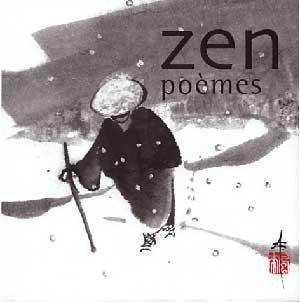
Ryukan's Reply to a Friend's Letter

Your smoky village is not so far from here
But icy rain kept me captive all morning.
Just yesterday, it seems, we passed an evening together discussing poetry
But it’s really been twenty wind-blown days.
I’ve begun to copy the text you lent me,
Fretting how weak I’ve become.
This letter seals my promise to take my staff
And make my way through the steep cliffs
As soon as the sun melts the ice along the mossy path.

From ‘Zen Poems’, edited by Manu Bazzano with illustrations by AndrĂ© Sollier

Monday, October 4, 2010

Letter-writing quotes

Here are some quotes about letter-writing, by which we mean writing letters by hand in the ‘old-fashioned’ way. They follow on very nicely from my post of Umberto Eco’s The lost art of handwriting and my own thoughts on the matter here and here.
I like the one about the old hotel.

In an age like ours, which is not given to letter-writing, we forget what an important part it used to play in people's lives.  Anatole Broyard

It seems a long time since the morning mail could be called correspondence.  Jacques Barzun

Take pains ... to write a neat round, plain hand, and you will find it a great convenience through life to write a small and compact hand as well as a fair and legible one.  Thomas Jefferson

I stayed in a really old hotel last night. They sent me a wake-up letter.  Steven Wright

In a man's letters you know, Madam, his soul lies naked, his letters are only the mirror of his breast, whatever passes within him is shown undisguised in its natural process.  Nothing is inverted, nothing distorted, you see systems in their elements, you discover actions in their motives.  Samuel Johnson

When he wrote a letter, he would put that which was most material in the postscript, as if it had been a by-matter.  Francis Bacon

In the midst of great joy do not promise to give a man anything; in the midst of great anger do not answer a man's letter.  Chinese proverb

The word that is heard perishes, but the letter that is written remains.  Proverbs

You don't know a woman until you have a letter from her.  Ada Leverson

To find out your real opinion of someone, judge the impression you have when you first see a letter from them.  Arthur Schopenhauer

Letter writing is the only device for combining solitude with good company.  Lord Byron

One good thing about not seeing you is that I can write you letters.  Svetlana Alliluveya

Letters have to pass two tests before they can be classed as good: they must express the personality both of the writer and of the recipient.  E. M. Forster

I have received no more than one or two letters in my life that were worth the postage.  Henry David Thoreau

Please write again soon. Though my own life is filled with activity, letters encourage momentary escape into others lives and I come back to my own with greater contentment.  Elizabeth Forsythe Hailey

Sir, more than kisses, letters mingle souls; for, thus friends absent speak.  John Donne

A letter is a blessing, a great and all-too-rare privilege that can turn a private moment into an exalted experience.  Alexandra Stoddard

We lay aside letters never to read them again, and at last we destroy them out of discretion, and so disappears the most beautiful, the most immediate breath of life, irrecoverable for ourselves and for others.  Johann Wolfgang von Goethe

A letter always seemed to me like immortality because it is the mind alone without corporeal friend.  Emily Dickinson

Letters are among the most significant memorial a person can leave behind them.  Johann Wolfgang von Goethe

Letters are like wine; if they are sound they ripen with keeping. A man should lay down letters as he does a cellar of wine.   Samuel Butler

The tender word forgotten,
The letter you did not write,
The flower you might have sent, dear,
Are your haunting ghosts tonight.  Margeret Elizabeth Sangster

It does me good to write a letter which is not a response to a demand, a gratuitous letter, so to speak, which has accumulated in me like the waters of a reservoir. Henry Miller

I have made this letter longer than usual, only because I have not had the time to make it shorter.  Blaise Pascal

A person who can write a long letter with ease, cannot write ill. Jane Austen

Letter writing is an excellent way of slowing down this lunatic helterskelter universe long enough to gather one’s thoughts.  Nick Bantock

Poets don’t draw. They unravel their handwriting and then tie it up again, but differently. Jean Cocteau

A Letter is a Joy of Earth -
It is denied the Gods.  Emily Dickinson

Never lose an opportunity of seeing anything beautiful, for beauty is God's handwriting. Ralph Waldo Emerson

I am a little pencil in the hand of a writing God who is sending a love letter to the world.  Mother Theresa

Image by The Missive Maven. Check out her blog.

Monday, September 27, 2010

The lost art of handwriting - Umberto Eco

Speaking of the stop teaching handwriting in school or not issue, would you believe it? It appears I am once again well behind the program on this one. The following is a piece written by Umberto Eco and published in The Guardian on Monday, 21 September 2009 (a year ago almost to the day). Needless to say I am of his way of thinking.

The days when children were taught to write properly are long gone. Does it matter? Yes, says Umberto Eco

Recently, two Italian journalists wrote a three-page newspaper article (in print, alas) about the decline of handwriting. By now it's well-known: most kids – what with computers (when they use them) and text messages – can no longer write by hand, except in laboured capital letters.
In an interview, a teacher said that students also make lots of spelling mistakes, which strikes me as a separate problem: doctors know how to spell and yet they write poorly; and you can be an expert calligrapher and still write "guage" or "gage" instead of "gauge".
I know children whose handwriting is fairly good. But the article talks of 50% of Italian kids – and so I suppose it is thanks to an indulgent destiny that I frequent the other 50% (something that happens to me in the political arena, too).
The tragedy began long before the computer and the cellphone.
My parents' handwriting was slightly slanted because they held the sheet at an angle, and their letters were, at least by today's standards, minor works of art. At the time, some – probably those with poor hand- writing – said that fine writing was the art of fools. It's obvious that fine handwriting does not necessarily mean fine intelligence. But it was pleasing to read notes or documents written as they should be.
My generation was schooled in good handwriting, and we spent the first months of elementary school learning to make the strokes of letters. The exercise was later held to be obtuse and repressive but it taught us to keep our wrists steady as we used our pens to form letters rounded and plump on one side and finely drawn on the other. Well, not always – because the inkwells, with which we soiled our desks, notebooks, fingers and clothing, would often produce a foul sludge that stuck to the pen and took 10 minutes of mucky contortions to clean.
The crisis began with the advent of the ballpoint pen. Early ballpoints were also very messy and if, immediately after writing, you ran your finger over the last few words, a smudge inevitably appeared. And people no longer felt much interest in writing well, since handwriting, when produced with a ballpoint, even a clean one, no longer had soul, style or personality.
Why should we regret the passing of good handwriting? The capacity to write well and quickly on a keyboard encourages rapid thought, and often (not always) the spell-checker will underline a misspelling.
Although the cellphone has taught the younger generation to write "Where R U?" instead of "Where are you?", let us not forget that our forefathers would have been shocked to see that we write "show" instead of "shew" or "enough" instead of "enow". Medieval theologians wrote "respondeo dicendum quod", which would have made Cicero recoil in horror.
The art of handwriting teaches us to control our hands and encourages hand-eye coordination.
The three-page article pointed out that writing by hand obliges us to compose the phrase mentally before writing it down. Thanks to the resistance of pen and paper, it does make one slow down and think. Many writers, though accustomed to writing on the computer, would sometimes prefer even to impress letters on a clay tablet, just so they could think with greater calm.
It's true that kids will write more and more on computers and cellphones. Nonetheless, humanity has learned to rediscover as sports and aesthetic pleasures many things that civilisation had eliminated as unnecessary.
People no longer travel on horseback but some go to a riding school; motor yachts exist but many people are as devoted to true sailing as the Phoenicians of 3,000 years ago; there are tunnels and railroads but many still enjoy walking or climbing Alpine passes; people collect stamps even in the age of email; and armies go to war with Kalashnikovs but we also hold peaceful fencing tournaments.
It would be a good thing if parents sent kids off to handwriting schools so they could take part in competitions and tournaments – not only to acquire grounding in what is beautiful, but also for psychomotor wellbeing. Such schools already exist; just search for "calligraphy school" on the internet. And perhaps for those with a steady hand but without a steady job, teaching this art could become a good business.

Saturday, September 25, 2010

Stop teaching handwriting in school, do not

A few weeks ago I fell on an article written by a professor proposing that we stop teaching handwriting in school. I will not link to it, but if you Google it you are sure to find it. Her son was having trouble writing certain letters at school and she found, after a brief overview of the history of writing, that the time had come to move on to electronic writing methods and she ended with a fling at writing as so much pushing of a graphite stick in various directions. When I finished reading this, if I had had immediate access to the comments section, I would certainly have written that this was the stupidest idea I had ever heard in my entire life. I might have added something like, is your son also having trouble with art at school? Perhaps we should stop teaching art as well, we have computer graphics programs now, and after all it is just so much pushing around a paintbrush in various directions.
I was quite shocked at my reaction, at the strong emotions I felt, and of course I realised that that was partly the author’s intention: to be provocative. I then decided it did not merit serious thought or a serious reply and moved on.
Since then I have noticed that my post The importance of good handwriting is quite popular and I am constantly reminded of the contrary article. I have found myself mulling it over. Then I began to think (cue heavenly light) that perhaps it fell to me to reply to the article (cue singing angels), that my entire life up to now had brought me to this moment (cue dark clouds of doubt parting), that my blog was the perfect vehicle (cue sun), and that my blog post on this subject might be read by some young impressionable mind and it would encourage him to persevere in his handwriting technique and he would go on to become a second Shakespeare who would influence an entire generation…  (OK, cut the heavenly light, angels: take 15). 
I am not a professor, nor a writer; I am just a guy with a blog but I will tell you what I think off the top of my head and you will be the judge.
I find it sad and surely irresponsible that an educator should hold such a mistaken view (and encourage others to hold it) but I suppose it is a sign of the times. There will always be people impatient for change and impatient of the old ways. I know because I have acted in that way in my time also, unfortunately. It is the lot of impatient youth.
But it seems to me that learning how to write is the basic building block of education. And no matter how easy to use and ubiquitous the electronic tablet becomes, pen and paper will always be necessary and indeed an art form. Necessary because pen and paper are (almost) always to be had - computers, tablets, electricity and batteries are not. Use those other electronic forms by all means, but handwriting has to be there to fall back on. I am not going to belabour the point, it seems so obvious to me. I am sure you can think of a hundred situations where a written message is the best or the only way.
It also seems to me reprehensible that an educator should undermine children’s resolve to learn how to write by hand and also parents’ efforts to help and encourage them. Perhaps it is more difficult for some children than others, but if we were to choose what should be taught in school on that basis where would we be? There is something to be said for the process of overcoming difficulties and personal inclination and mastering a useful skill by perseverance.
Civilization has come the long road through many a dark brutal age to the point where literacy is possible for everyone today and the suggestion to abandon the written word in school after so many have struggled and fought to bring literacy to the world would be to do them and our children a great disservice.
But my real argument has more to do with this ‘fling it down the gutter’ attitude to all the old ways of doing things. I must sound very much like the baby boomer I am as I write this, but I do assure you in my time the shoe was on the other foot as you can read in my last post about handwriting. I have evolved, my attitude has changed, for the better I hope. The computer and the advance of technology is not the secret of happiness. People are less happy today than they were 50 years ago. All the twitters and e-mails you may send your friends may be fun, but I doubt they give as much pleasure as our ancestors (parents, grand parents!) enjoyed when they received a single thoughtful (handwritten) letter.
I am not against technology or progress. I have a blog don’t I? I am simply saying that not every technological advance is necessarily an advance for human happiness. Technology has to be used wisely, usefully, reasonably. And respect for the old ways is a virtue. A well-written, thoughtful letter is an art form in itself. Where there is no art in daily life, there is no life. No life worth the living.
I am reminded of something I read about the art of the Japanese Zen garden. The author was talking about how one might apply to a (Japanese) Zen garden master to become his pupil. He gave the master’s postal address. He advised that it might take some weeks or even months to receive an answer. Zen garden masters did not have faxes, still less computers.
I am sure they are quite, quite happy without them.

Read more about the lost art of letter writing at Proverbs 31 maiden.

Image: ‘Winter’s Child’ by Lucia

Wednesday, July 21, 2010

The Importance of Good Handwriting

When I was at school in England, a long, long time ago, they taught us to write a modified form of Copperplate script. I didn’t know it was Copperplate at the time; it was simply ‘handwriting’ to me. The following image of a Copperplate script is not exactly what we wrote but not far from it neither.


This went on till I was about nine or ten. Then one day I noticed the handwriting of the boy next to me. He was, I remember, some fugitive latecomer from another school or town. He certainly did not learn how to write at my school. What was this writing? My eyes could hardly believe. No loops, no curls, no flourishes at all: capitals simplified to the extreme, as found in the newspaper, every letter reduced to its simplest expression. Here was the future! Here was progress! It was modern, efficient, avant-garde and a few other adjectives I did not know yet. It was simply ‘cool’. I adopted this knew way of handwriting in an instant. There was nothing to practice: just eliminate all this useless decoration. To give credit to my teachers, not a one made any comment to me that my handwriting had ‘changed’. Individuality was respected.

Fast forward a life time. A new respect for the old ways is quietly born of countless hours reading philosophy and history and realizing how shitty are the new ways. Comments about messages written in ‘a fine Copperplate hand’ keep cropping up in my beloved Patrick O’Brian historical novels. I begin to look at my own handwriting again. Sadly, it has not evolved since that day when I was 9 years old. What seemed to me then to be an excellent handwriting script, now appears to be lazy, superficial, without character. Strange how perceptions change so quickly, innit?

So I am here to tell you that I am absolutely relearning how to write in Copperplate script, just like they taught me at school a long, long time ago. Perhaps not entirely like. But not far from it neither.

Image 1 from scribblers

Image 2 from Wikipedia:  Detail of the log of HMS Victory kept by William Farquhar, 1854-55

Discover The Tale of Genji, the 11th Century classic of Japan (click image)

Discover The Tale of Genji, the 11th Century classic of Japan (click image)
Kiyomizudera Temple has a large veranda looking out over Kyoto and beyond