Showing posts with label Subconscious. Show all posts

Saturday, September 11, 2010

Why is the sky dark at night? - Olber's Paradox

Here is an entry from my personal diary for Friday. Though it rambles on for a couple of paragraphs, the essence of it passed through my mind as a flash of insight lasting perhaps 10 seconds that struck me as I was on my way home from a reluctant evening walk. This is what I wrote about it when I got home (with very little editing). It is an example of the limited power of words to express what is in our mind.

The other day I saw a video – ‘Why is the sky dark at night? – about Olber’s paradox. It is a question that puzzled medieval astronomers: if the universe is infinite and has existed forever, the light from an infinite number of stars should fill every available spot in the night sky making it bright as day. The video explains that today we know that the universe is not infinitely old and therefore not all the light from all the stars has had time to get here. The narrator says ‘the darkness of the night sky is a characteristic that argues against infinity’.
Tonight as I was walking home from a walk (yes I wrote that), I had an insight as I remembered this video and phrase. The universe has not existed infinitely: it has a finite beginning. But the space existed. Something existed for there to be a big bang in. Where did those gases come from? Where did the space before the big bang come from? Wherever it came from is a place of higher being, higher intelligence, higher good. The paradox may argue against infinity, but it argues for God, for another essence beyond our comprehension. If we align ourselves with this essence, we align ourselves with creative powers and principles – with God – and we cannot go wrong. We will prosper. If not, we will not prosper (or not for long). In this we can rely, in this we can have faith. Not that we should expect everything to go our way without effort all the time. There can be no guaranteed results or there would be no life, no point, no merit. ‘Do not expect God to change the laws of nature for you’. But having faith is the correct attitude. Following the virtues as much as we can is the correct conduct. Courage, patience, love etc. Discipline also : discipline and courage are needed to harness virtue as the sailor harnesses the wind.
To know what one should do – for one’s health for one thing – and not do it is weak and stupid. To have gifts and not develop them – even moderate gifts that can become greater – is a terrible waste. To have the ability to understand virtue and not to follow it is against the intention of the higher essence, against the laws of nature, against the will of God.
To have faith in God is to have faith in oneself, since God is inside us. When we have faith in ourselves, we reward ourselves, as God. We allow ourselves to succeed, because in our hearts, our subconscious, we know that we have merited it by following the laws of nature and of God. And so it happens to us, according to our faith.


Thursday, April 30, 2009

The Way to Love (1) - The Last Meditations of Anthony de Mello

The title of this little book has at least two meanings: the way to love in the sense of how we should love, and the Way to love in the sense of the spiritual path to love. They are the same.
The lessons of this little book are not easy to swallow when we are reeling from the loss of a love. But they are the necessary lessons that we need to learn in order to heal and to pass to the next level of love. My copy is dog-eared and many passages are underlined. I think I had a lot of lessons to learn.
De Mello’s message is that love is basically a nightmare. Or rather attachment is a nightmare, which in many of our cases is the same thing because we don’t know what love really is.

If you wish to attain lasting happiness, you must be ready to hate father, mother, even your own life and to take leave of all your possessions. Not by renouncing them or giving them up because what you give up violently you are forever bound to. But rather by seeing them for the nightmare they are; and then, whether you keep them or not, they will have lost their grip over you, their power to hurt you, and you will be out of your dream at last, out of your darkness, your fear, your unhappiness.

De Mello shows us that we are programmed by our upbringing and by society to believe we cannot be happy without certain things – money, power, love etc. We exhaust our energies trying to rearrange reality around us to conform to our programming. Sometimes we succeed briefly, but not for long. It is an impossible task. We must change the programming instead. This reminds me of the Buddhist saying: we cannot cover the world with leather, but if we cover our feet with leather it will be the same as covering the world with leather.

On the contrary, getting rid of attachments is a perfectly delightful task if the instrument you use to rid yourself of them is not willpower or renunciation but sight. All you need to do is open your eyes and see that you do not really need the object of your attachment at all…

Attachment is a false belief, a fantasy in your head. Think of your previous loves that you thought you could never live without, says De Mello, and how you got over them. De Mello suggests this affirmation to ‘give the order’ to your subconscious to change the programming:

I am not really attached to you at all. I am merely deluding myself into the belief that without you I will not be happy.

De Mello is pitiless in hammering the message home that the ‘battle of attachments’ can never be won. If we don’t get what we want we are unhappy, but if we get what we want, the minds dwells on the one thing we didn’t get. This reminds me of what we saw in my posts on gratitude: if we are not grateful for what we already have, we are unlikely to be grateful for what we will have. When we get what we want, without gratitude we soon become bored and start wanting something else and the battle of attachments wages on. De Mello enjoins us to enjoy things without becoming attached to them, without clinging to them, without believing that we can’t live without them (because we can and do live without them).

If you learn to enjoy the scent of a thousand flowers you will not cling to one or suffer when you cannot get it.

This brings us in fact to the right way to love: loving in a non-attached way, with no strings ‘attached’, loving from a position of independence. This goes against the way we normally love: we in effect say to the person ‘if you want to be especial to me you must meet my conditions’. Likewise, if we want to be ‘especial’ to someone we must ‘pay a price in lost freedom’.
Again these are hard lessons, when you are hurting, when you would willingly pay any price to get your lost love back. But our lost love is not coming back and usually it is better that way. And our path to healing passes through the realisation that it is better that way and why. De Mello gives us a striking way to see clearly through our pain by saying to the object of our attachment:

I leave you free to be yourself, to think your thoughts, to indulge your tastes, follow your inclinations, behave in any way that you decide is to your liking.

Once we say those words, we will either disagree with them and reveal our clinging, exploiting, deluded self or agree with them, sincerely, in which case we will feel all our attachment and dependence drop. It is likely we will not agree, in which case those words will serve as an affirmation to lead us to that place where they will become true.

I used these affirmations and I can say they help. It is a cruel medicine and it doesn’t work overnight, but it is what the doctor ordered.

More to come in part two

Saturday, April 25, 2009

Love at the edge of doom

Let me not to the marriage of true minds
Admit impediments. Love is not love
Which alters when it alteration finds,
Or bends with the remover to remove:
O no! it is an ever-fixed mark
That looks on tempests and is never shaken;
It is the star to every wandering bark,
Whose worth's unknown, although his height be taken.
Love's not Time's fool, though rosy lips and cheeks
Within his bending sickle's compass come:
Love alters not with his brief hours and weeks,
But bears it out even to the edge of doom.
If this be error and upon me proved,
I never writ, nor no man ever loved.

Shake-speare (De Vere) - Sonnet 116

If you are suffering from the loss of a love, you may have found little solace in my last post Love (lost). Your reasoning mind may have found it mildly interesting but your heart will have dismissed it in an instant with a 'But you don't understand'. I quote this powerful verse from Shake-speare (De Vere) by way of saying that I do understand.
When we are in love, and lose that love, there can be no solace for the heart in the short term. This has been my experience anyway. Perhaps it is a psycho-physiological trick of nature to keep couples together to ensure the survival of the species. In my case, only time (many years) has faded the memory without erasing it completely.
But there is nothing bad but thinking makes it so, the bard also said. And if you are a regular reader you are familiar with the Taoist philosophy of facing up sincerely to the times and learning its lessons. There is also the Taoist philosophy that everything we are living now we created ourselves by our past actions. We are responsible for manifesting everything around us. There is the philosophy that everything we are living now is exactly appropriate for us at this moment and is exactly what we need to experience now in order to grow. There is also the philosophy that we already have everything we need here and now (gratitude) and wishing for things to be exactly the way they are now allows us to appreciate them. These are important ideas for they can help us in changing our viewpoint from that of a victim of other people’s actions to active engineers of our own experience.
To activate that change of viewpoint, one of the best ways is to use affirmations. Yes, I know your heart is groaning ‘Is that all you’ve got?’ But there is untold power in the word as it becomes true for the subconscious. For the subconscious creates for us what we believe to be true and cannot tell the difference between what we experience in reality and what we concentrate on in our mind. Concentrate on sorrow or concentrate on transformation, and your subconscious will create it. Here are some powerful affirmations from ‘Manifesto’ by my favourite modern-day Taoist master, Stephen Russel.

All internal psycho-emotional discomfort evaporates now and I find myself at peace.

I acknowledge myself for having the courage and endurance to carry on.

I am cheerful no matter what.

I determine what kind of life I have – no one and nothing else.

I create my own reality according to which set of beliefs I subscribe to now. I now alter the very foundations of my reality and thus build myself a different and more useful belief structure that even now is producing magnificent results.

I take full responsibility for myself and my moment-by-moment experience of life from this moment on.


I am alive.

Saturday, February 14, 2009

The Seal of Power

The Chinese way of writing in pictures has always held a beautiful mystery and a fascination for me but remains one of my unfulfilled desires for exploration and study. And as a part of the Chinese way of writing, the use of seals is perhaps the most beautiful and the most mysterious aspect.
The Chinese have been using seals for three thousand years and their use continues to this day in business and in private life. The earliest examples of seals date from the Shang Dynasty (16-11 BC) but they were in use long before. According to a Han dynasty tradition, the first seal was given to the Yellow Emperor by a yellow dragon. The significance of the seal was to confer the Mandate of Heaven on the rightful ruler of the empire. (You can read an interesting overview here).
Looking further into the background of Chinese seals, I discovered the story of the Heirloom Seal, or the Imperial Seal of China, which has all the trappings of an epic Hollywood movie. You can read about it here at Wikipedia. In short, the seal was created in 221BC and passed down through the ages as dynasties rose and fell. Wars were fought for ownership of the seal as it was believed to confer legitimacy on the regime that possessed it, and history has proven them generally right. The seal was eventually lost in the Five Dynasties and Ten Kingdoms period (907=960).
Now what has all this got to do with philosophy? Well, to me, anything that confers the Mandate of Heaven is well worth looking into! Seriously, there is a power in these things that we can appropriate for ourselves. And if you think I am full of it, I will just ask you to consider the following:
1 - He is able who thinks he is able, said Buddha. That stone, that relic, that object is sacred and holy because we say it is sacred and holy and act accordingly. That thing or that person is powerful, fearsome, hated or beloved who we believe to be so. Things and people have the power and the qualities that we ascribe to them. (See my post The power of the subconscious mind). So it is with seals.
2 - Modern-day corporations spend millions of dollars designing, publicizing and protecting their logos, a modern form of seals or heraldry. Why?
3 - Hitler knew exactly what he was doing when he appropriated the sacred swastika as his emblem for the Nazi party. In the same vein, Churchill ordered that German submarines be referred to always as ‘U-Boats’, thus ‘branding’ them as something distinct from and far more sinister than ‘our submarines’.
So how can we appropriate the power of symbols or seals in our life today?
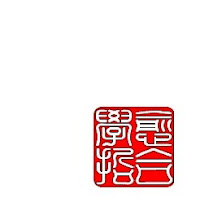
First you need a seal. If you have ever studied Chinese painting you may already have your seal. (I am here to tell you that affixing your seal on a painting that you have just created is a thrilling yet solemn occasion). You can have a seal made online or, depending where you live, at your local Chinatown. For online virtual use, I discovered a fun little site at Chinese Tools. Here you can translate your name into Chinese characters and then copy the characters into a tool that creates your Chinese name seal. That is where I got the seal you see in my profile, meaning ‘Alex’. You can also translate a phrase, which is what I did to get the seal at the bottom of the right-hand column, which means ‘Healing philosophy’.
Once you have a seal, you can then use it as a symbol of personal power, a talisman, and an invocation. When setting goals, don’t just write them down. Sign them with your ‘seal of power’. But make sure you follow through. Treat your seal seriously. If you are not absolutely serious about completing the goal, don’t use the seal. Any failure to follow through will weaken the power of the seal. The seal will only have that power that you confer upon it through repeated successful use. But once that power is conferred, it will be embodied in the seal and seem to take on a power of its own. Increase your seal’s power by using it on everything good and beautiful that you create, on every successful project. Use it on your best letters. Sign your checks with it (OK maybe not).
Of course, all this will only resonate with you if you are into Eastern culture. If not, perhaps a heraldic symbol would work better for you, or a Christian symbol. Choose the symbol that appeals to you, one that will feel at home in your subconscious. For it is the power of the subconscious that we are invoking here, which is our link to the power of the universal. The same power that conferred the Mandate of Heaven on the Yellow Emperor.
.
Image from Wikimedia: Seal of the Mongol ruler Ilkhan Ghazan, over the last two lines of his 1302 letter to Pope Boniface VIII. The seal reads "Seal certifying the authority of his Royal Highness to establish a country and govern its people"

Thursday, January 8, 2009

The Observer Within

Even after writing several posts on anger, I find that I still have a long way to go. I recently ‘blew my top’ in quite a (for me) shocking way. I went from being in a good mood, laughing and smiling, to blood-curdling indignant anger and oath calling in the space of about 45 seconds. That is several thousand eons of good deeds up in smoke right there. And I cannot say it was for a good cause. However, in the midst of the anger I did experience what I have known some writers call ‘the observer within’. This is our ‘higher self’ or subconscious, which always remains emotionless even if we cannot, observing events happening to us in a dispassionate way. There was a distinct moment where I could have ‘snapped out of it’, but it passed – I let it pass - and I continued in my anger.
I remember once my son said something to me that from anyone else would have angered me enormously. Indeed for a fraction of a second I felt the anger. But before anything could be expressed some inner circuit-breaker was flipped - getting angry at my son for sort of ‘being me’ seemed suddenly ridiculous, impossible - and the anger instantly disappeared. Note that I did not ‘suppress’ the anger: it suddenly no longer existed.
This leads me to conclude that anger is a very strange thing indeed. If one second we can be gripped by its emotion and almost in the same second switch it off or look at it from a calm centre, then it has no real life, no real basis in our mind. Anger really is a temporary insanity.

A Zen student came to Bankei and complained: "Master, I have an ungovernable temper. How can I cure it?"
"You have something very strange," replied Bankei. "Let me see what you have."
"Just now I cannot show it to you," replied the other.
"When can you show it to me?" asked Bankei.
"It arises unexpectedly," replied the student.
"Then," concluded Bankei, "it must not be your own true nature. If it were, you could show it to me at any time. When you were born you did not have it, and your parents did not give it to you. Think that over."

.
From ‘Zen Flesh, Zen Bones’ by Paul Reps

Thursday, January 1, 2009

Christmas feast, New Year fast

Another year lies before us like a blank page. What shall we write? More of the same or something new?
To write something new, we must first want it. We must want it so much that we are willing to change our sacred habits to get it. We have to reach that ‘tipping point’ where the dubious pleasures of staying in a certain bad habit are overcome by our desire for something else. We must imagine our new goal. Dream it. See it. Pray for it. Ask for it. Believe it. Think about it all the time. Only then will our subconscious get the message and make it appear. We will act in new ways as our subconscious prods us in the direction of our new blueprint.
Our subconscious will also make us notice new opportunities that were always there but to which we were previously blind. One of my goals for the coming year is to improve my health and vitality. With my recent sickness (bronchitis) I had emphatically reached the tipping point that had been building for a while. And whilst browsing a website called The Habit Code I came across Ways to eliminate bad habits and a comment about fasting being helpful in this regard. I already knew something about the ancient time-proven physical and spiritual benefits of fasting but had I not had it in my mind that I wanted to improve my health I probably would never have noticed the comment. Now my subconscious seized upon it, virtually waving it in my face and saying ‘This is what we need’.
So I am starting off the New Year with a fast. Ain’t I the life of the party?

I fast for greater physical and mental efficiency. Plato

Everyone has a doctor in him or her; we just have to help it in its work. The natural healing force within each of us is the greatest force in getting well. Our food should be our medicine. Our medicine should be our food. But to eat when you are sick, is to feed your sickness. Hippocrates

Fasting is the greatest remedy – the physician within! Paracelsus

To lengthen thy life, lessen thy meals. The best of all medicines is rest and fasting. Benjamin Franklin

Fasting is the world's most ancient and natural healing mechanism.
Fasting triggers a truly wondrous cleansing process that reaches right down to each and every cell and tissue in the body. Within 24 hours of curtailing food intake, enzymes stop entering the stomach and travel instead into the intestines and into the bloodstream, where they circulate and gobble up all sorts of waste matter, including dead and damaged cells, unwelcome microbes, metabolic wastes, and pollutants.
All organs and glands get a much-needed and well-deserved rest, during which their tissues are purified and rejuvenated and their functions balanced and regulated. The entire alimentary canal is swept clean. By rebuilding immunity, health is naturally restored and disease disappears.If health and immunity are thereafter conscientiously maintained, the individual is no longer vulnerable to disease and dieting become unnecessary. Surely one of the most overlooked and yet most valuable modes of healing that will be rediscovered in the future of the new medicine is the fast. This is because of the increasing interest in looking to oneself for healing powers. For the fast is an inward process and cannot be entered upon only from an outer approach with any expectation of a lasting benefit. The person must invariably be involved with the overall results. This therapeutic encounter is in direct contrast to the usual non-involvement in the physician-directed, disease-oriented medical practice of today. Evart Loomis M.D.

Wednesday, October 1, 2008

The power of the subconscious mind

Our subconscious mind has far-reaching powers beyond our limited understanding. It can remember everything that has ever happened to us even when we can’t. Through its connection to the universal ‘affiliate program’, our subconscious can access universal knowledge and memory. Under hypnosis people can speak foreign languages, play the piano or ‘become Napoleon’. The subconscious never sleeps. It controls all our bodily functions from the heartbeat to assimilation and healing. If once the subconscious believes something to be true, it sets about manifesting that reality in our lives. As the saying goes, ‘Be careful what you desire, because you just might get it’. Ford said

If you believe you can do a thing or if you believe you can’t, you are right.

Doctors are, or should be, very careful about uttering a ‘condemning word’ to a patient. There are many examples of patients doing well until believing themselves to have a fatal disease at which point they ‘accept the condemnation’ and quickly decline into death.
If you find all this hard to believe, I recommend you read ‘The Power of Your Subconscious Mind’ by Dr. Joseph Murphy. This book, first published in 1963, looks somewhat plain and drab when you pick it up. When I gave my son a copy he hardly gave it a glance. There is nothing to suggest you have in your hands a book that contains unlimited power. But that is what it is.
Dr. Murphy, like a modern-day Lao Tzu, knocks on all our doors to make us come out and see the light. Relationships, career, money, health, confidence, every aspect of life is dealt with and the effects of the correct or incorrect use of the subconscious are convincingly expounded. The basis of the truth of the subconscious can be found in all the world’s wisdom. For example, in the Bible we find:

Whosever shall say unto this mountain, Be thou removed and be thou cast into the sea; and shall not doubt in his heart, but shall believe that those things which he saith shall come to pass; he shall have whatsoever he saith. Mark 11:29

We all know or know of people who have accomplished great things because they believed in themselves. There was never any doubt in their mind (conscious and subconscious) as to the eventual outcome, and their subconscious made it manifest.
In his book about surviving the Nazi death camps, ‘Man’s search for meaning’, Victor Frankl tells us those inmates who survived were without exception those who ‘had a reason for living’ and never entertained the possibility that they might not live.

I hope I have said enough for you to discover this book for yourself. I will leave you with an affirmation from Dr. Murphy’s book that has the power to heal. It has a great calming, regenerating effect and I often fall asleep reciting it. Try it for yourself:

The perfection of God is now being expressed through me. The idea of perfect health is now filling my subconscious mind. The image God has of me is a perfect image and my subconscious mind recreates my body in perfect accordance with the perfect image held in the mind of God.

Discover The Tale of Genji, the 11th Century classic of Japan (click image)

Discover The Tale of Genji, the 11th Century classic of Japan (click image)
Kiyomizudera Temple has a large veranda looking out over Kyoto and beyond